
William Soergel grew up in Arizona and Maryland before they moved to Ann Arbor, Michigan, to pursue their doctorate in ancient history. Before leaving Maryland they received the name Tseten Dorje when they first took refuge in their childhood spiritual director, Jetsunma Ahkön Lhamo, a tulku of the Palyul lineage founded by the 17th century Namchö tertön, Mingyur Dorje. When they moved to Michigan, they received the name Karma Yeshe Jungne when they became a student of Lama Nancy Burks, an American lama who completed three-year retreat under Khenpo Karma Tharchin Rinpoche. Today Yeshe is also a student of Khenpo Tshering Chophel PhD of Karuna Buddhist Center, a student of the 12th Goshir Gyaltsab.
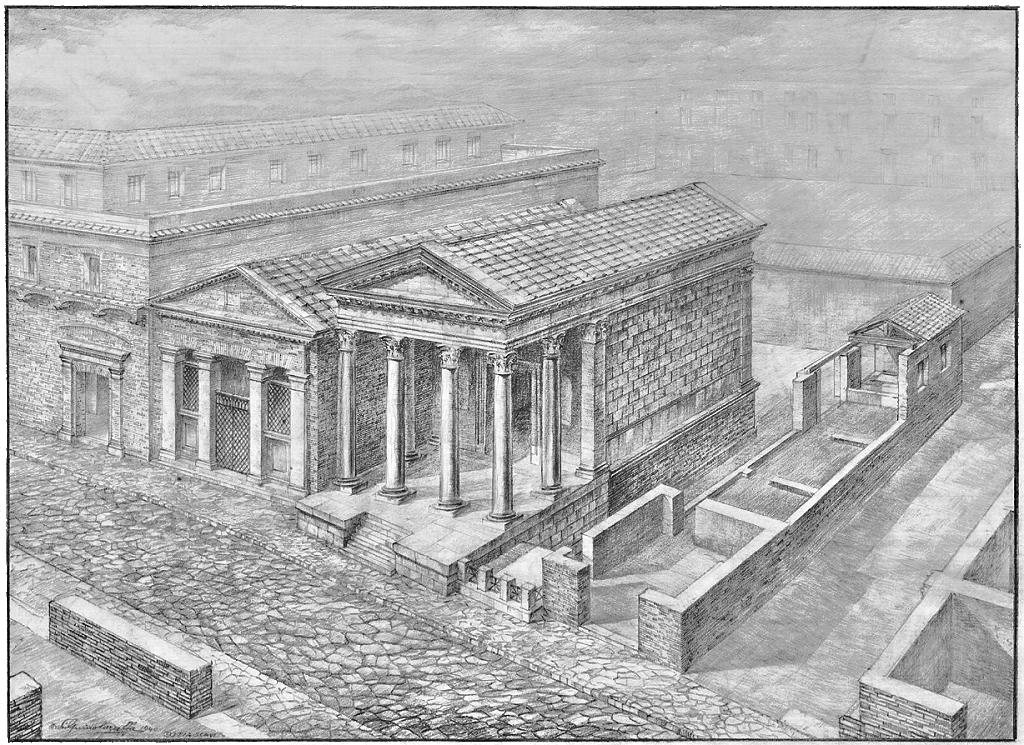
historian of ancient religion
William is a historian of Roman religion and holds a PhD in Ancient History from the University of Michigan in Ann Arbor. Their dissertation examines sanctuary and refuge in Roman religion as a self-help strategy, moral and theological concept, and cause of outrage. Despite the Romans’ infamous aggression, they argue that sacred space offered real protection in the ancient world in a greater way than scholarship has traditionally accounted for, and that Roman religious communities—like today—were safe spaces where people found belonging in a chaotic world. William applies the skills they learned as a historian to their dharma teaching and spiritual caregiving.
Their ministry is rooted in history as a contemplative practice. “History” comes from the Greek verb ἱστορεῖν historein—a verb meaning to inquire, to investigate or give an account of one’s investigation, and to judge what is right and just. In this sense, William’s historical discipline is an intellectual pursuit akin to other wisdom traditions that rely on other forms of investigation. William draws on these meanings to contemplate many topics, but especially religion, culture, and dharma.
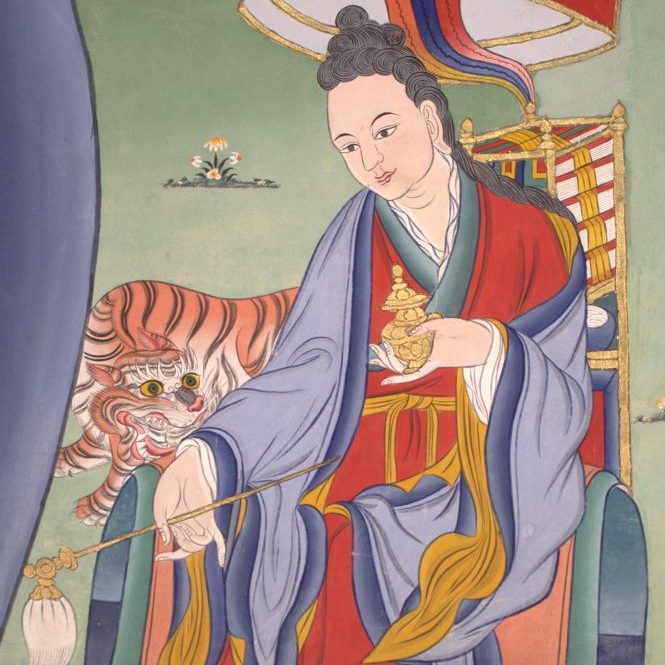
bodhicitta-driven dharma teacher
As a Kagyupa-raised-Nyingmapa, William embraces a rimé (ris med) attitude in their dharma talks and draws on their secular education as an historian of ancient religion. They teach on important Buddhist texts and their larger cultural and philosophical contexts to help students recall complex information from the Buddha’s doctrine, an important part of the spiritual path rooted in mindfulness (smṛti). Recollecting the Buddha’s 2,500 year-long tradition is as important a part of the spiritual path as contemplating meditation practice, ethics, and complex philosophy, like that of Nagarjuna, Asanga, or Vasubandhu.
To date, William’s dharma teaching has focused on the hagiographies (namthar) of Guru Rinpoche, Milarepa, and Gampopa and on the Vinaya, the historical canon where Buddhists meet the Buddha’s history and learn his teachings. They use texts and teachings from the Buddha’s doctrine to teach on karuṇā (compassion).
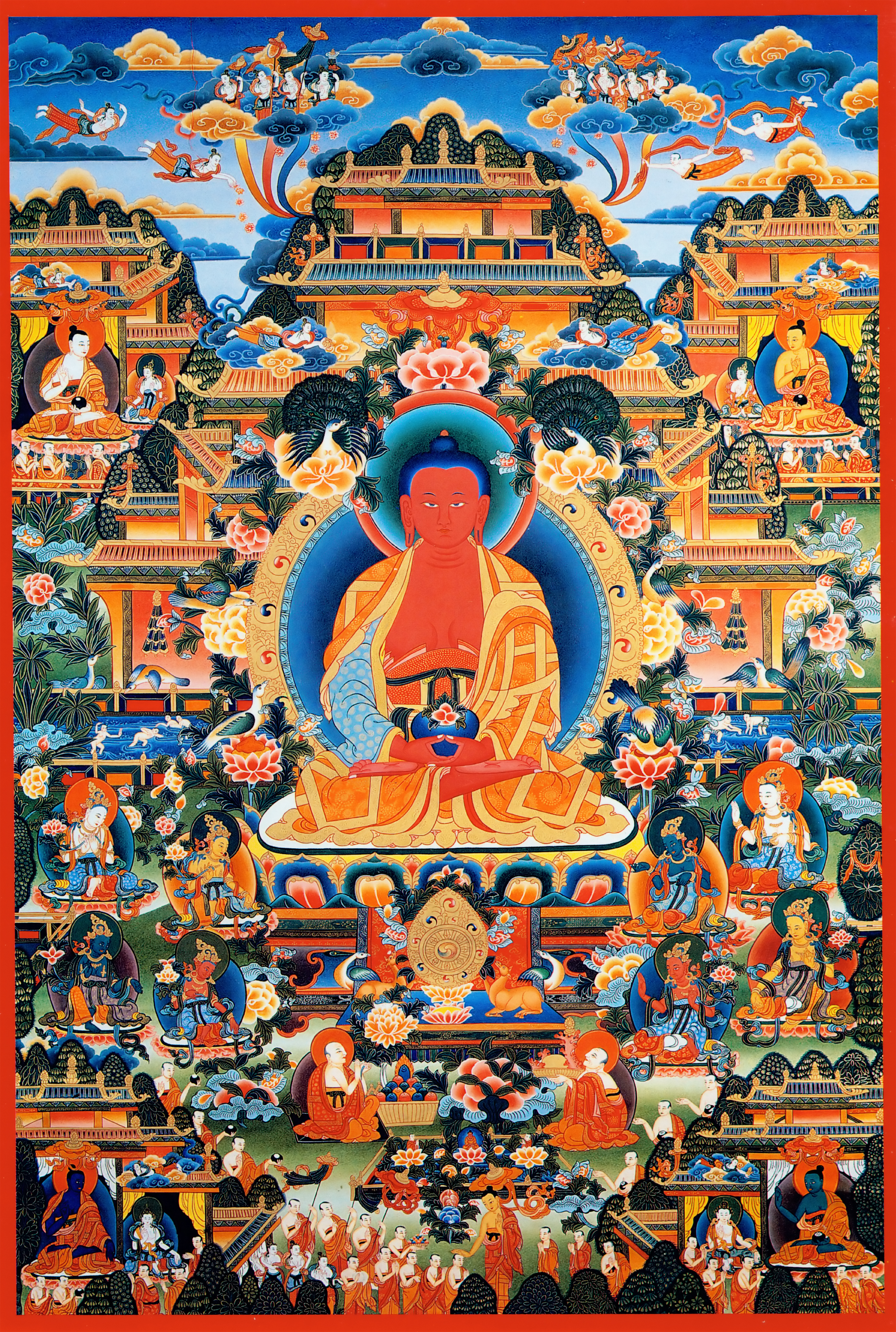
lay tantric yogin of emptiness and compassion
In Vajrayana Buddhism, ritual is as important a part of our spiritual path and represents the union of skillful means (upāya) and wisdom (prajñā), emptiness and compassion. As an upasaka, WTDS frequently serves as a lay tantrika yogin in their community’s ceremonies, officiates holiday ceremonies and major life event rituals, and provides spiritual care through hospitality. Since much of their ritual practice revolves around the Buddha Amitabha, William is available to lead rituals and to pray on behalf of others to members of the ‘padma’ family, such as Amitabha, Avalokiteśvara, Tara, and Padmasambhava. They also lead worship rituals directed at their community’s matron, Athena, whom we see as the perfection of wisdom.
lifelong micronationalist focusing on secular dharma
William founded their micronation, Sandus, in 2009 as a cultural and political creative project, hoping to transform their view and perspective on the world. Now, more than 15 years later, they continue to lead Sandus as the micronation’s upasaka, its monarch, leading and serving what has developed into an international community. Sandus today welcomes more than 20 citizens who are all motivated by communal service to address and combat our suffering and the suffering of those in our local communities and around the world. As Sandus’s founder, they made the bodhisattva vow a kin to a civic commitment for like-minded, politically active people like Sandum citizens. Today, they use mystical yoga to bring together elements from their micronational upbringing, their Buddhist practice, and own way of viewing the divine.
 WTDS Upāsaka